
The Flow Chart of Apparel Merchandising is a series of steps that take a garment from concept to consumer.
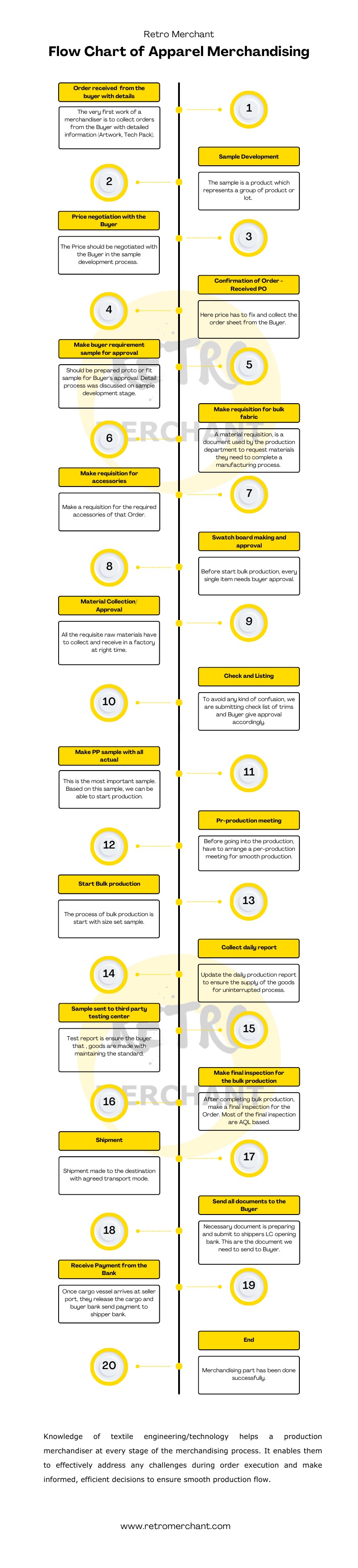
Apparel merchandising process: From Buyer Inquiry to Final Shipment
The apparel merchandising process is much more than placing an order and shipping garments. It is a carefully planned workflow that connects buyers, suppliers, factories, and quality teams to ensure every product is delivered on time and meets the buyer’s expectations.
Whether you’re a textile engineering student, a new merchandiser, or an apparel industry professional, understanding the merchandising flow is one of the most valuable skills you can learn. A single mistake at any stage can lead to production delays, quality issues, or financial losses.
What Is an Apparel merchandising workflow?
A Flow Chart of Apparel Merchandising is a visual guide that shows every step involved in garment production—from the moment a buyer sends an inquiry until the supplier receives payment after shipment.
Instead of memorising dozens of tasks, the flow chart helps you understand the complete process in a simple, organised way.
The 20 Steps of Apparel Merchandising
The merchandising journey begins when the buyer sends a product inquiry along with a tech pack, artwork, measurements, and fabric specifications. The merchandiser reviews the requirements and coordinates sample development for buyer approval.
After the sample is accepted, price negotiation takes place. Once both parties agree on the costing, the buyer issues the Purchase Order (PO), officially starting the order.
The merchandiser then prepares fabric and accessories requisitions, arranges swatch approvals, collects raw materials, and verifies that everything is ready for production. Before bulk manufacturing starts, a Pre-Production (PP) sample is made using actual materials and approved by the buyer.
Next comes the pre-production meeting, where all departments align on quality standards, production targets, and delivery timelines. During bulk production, the merchandiser continuously monitors daily production reports, follows up with different departments, and resolves any issues that could affect delivery.
After production is complete, garments undergo final inspection, often following the AQL (Acceptable Quality Level) standard. If the products pass inspection, they are packed, shipped, and all required export documents are prepared and submitted. Finally, payment is received according to the agreed payment terms, successfully completing the merchandising cycle.
Why Is This Flow Important?
A well-structured merchandising process offers several benefits:
- ✔ Reduces production delays
- ✔ Improves communication between buyers and factories
- ✔ Ensures timely material sourcing
- ✔ Maintains product quality throughout production
- ✔ Helps achieve on-time shipment
- ✔ Minimizes costly production mistakes
- ✔ Builds long-term buyer confidence
Who Should Learn Apparel Merchandising?
This guide is useful for:
- Textile Engineering students
- Fashion Design students
- Beginner Merchandisers
- Production Executives
- Buying House Professionals
- Garment Factory Employees
- Apparel Sourcing Professionals
Final Thoughts
A successful garment order doesn’t happen by chance—it follows a structured merchandising process. From buyer inquiry to sample development, material sourcing, bulk production, quality inspection, shipment, and payment collection, every step plays an important role.
If you want to build a successful career in the garment and textile industry, mastering the Apparel merchandising workflow is the perfect place to start. Once you understand these 20 essential steps, managing apparel orders becomes more organised, efficient, and professional.
Learn it. Source it. Produce it. Partner with JNC Fashion Ltd. for reliable apparel sourcing and merchandising solutions.

